
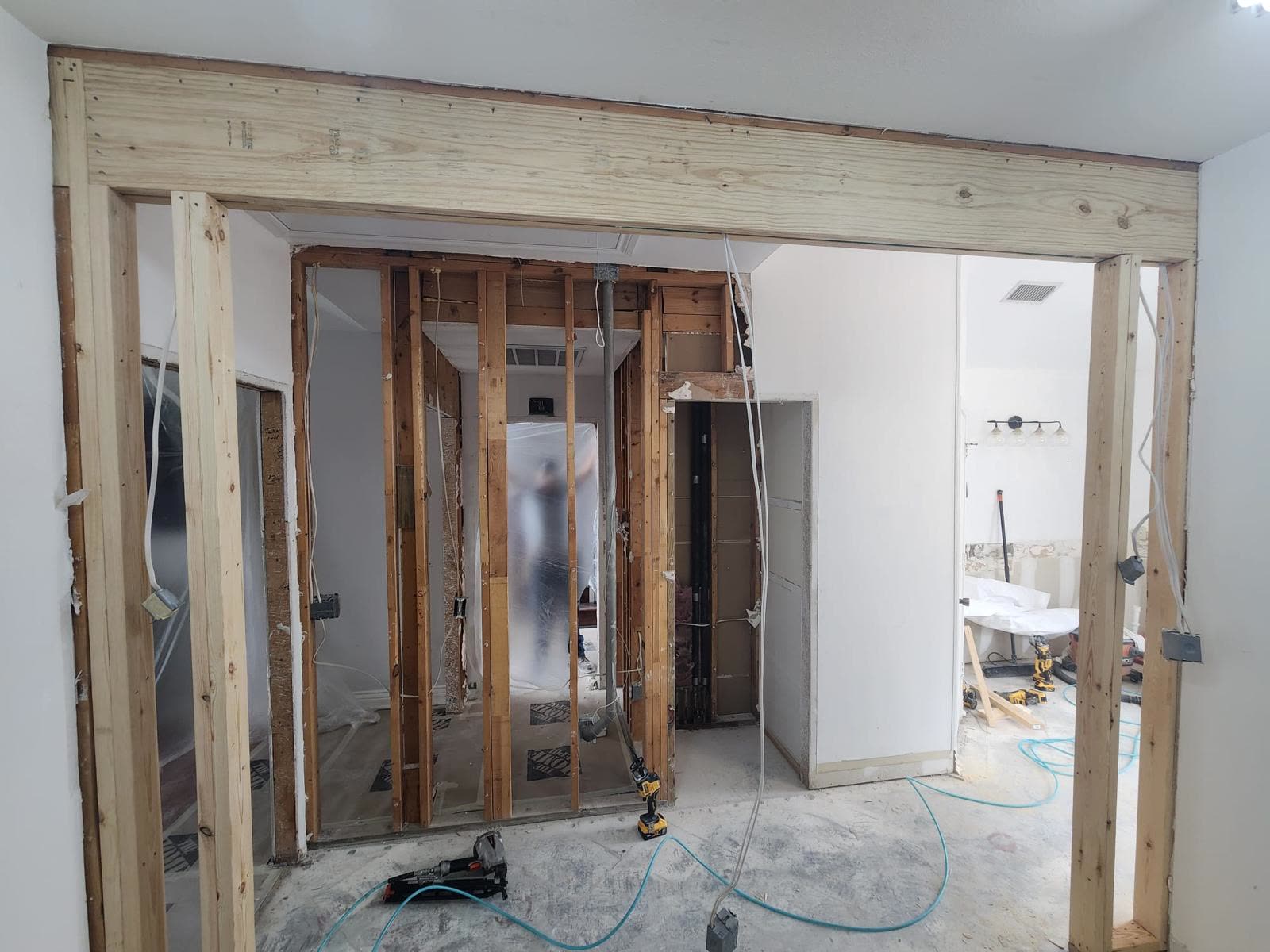
A garage conversion is one of the most cost-effective ways to add livable square footage — a home office, guest suite, gym, or rental space — without expanding your home’s footprint. Here’s what it costs in DFW and what makes the difference between a true room and a finished garage.
What you’re paying for
The walls and roof already exist, which is why conversions often cost less than a ground-up addition. The budget goes toward making the space genuinely livable:
- Insulation and climate control. Bringing walls, ceiling, and floor up to comfortable, code-compliant standards, plus HVAC.
- Flooring and finishes. Replacing the slab feel with finished floors, walls, and ceilings that match your home.
- Electrical and plumbing. Outlets, lighting, and — for a suite or kitchenette — plumbing.
- Windows, doors, and egress. Natural light and code-required exits.
- Permits. Conversions are permitted work, and code compliance protects the home’s value.
Garage conversion vs. room addition
A conversion uses existing structure, so it’s typically more affordable and faster than building new. An addition gives you a brand-new footprint and full design freedom. The right choice depends on the space you need and whether you’re willing to give up the garage. We help you weigh it during planning.
Why code compliance matters
A conversion done without permits can become a problem at resale. Done right — insulated, permitted, and finished to match — it adds real, lasting value. Our planning-first process handles the permits, scope, and selections up front so the finished space is comfortable, legal, and built to last.
Explore your options
Learn more about our ADUs & garage conversions service, or schedule a free consultation to see what your space could become.
Costs vary with the existing structure, scope, and finishes. Figures here are general planning guidance only.